The Susan B. Anthony Dollar Coin Worth $880,000: Collector’s Guide to Rare Errors and Varieties captures the attention of collectors and history lovers alike because it highlights how an often overlooked modern coin can reach astonishing values. Introduced at the end of the 1970s, this small-sized dollar coin was meant to replace the paper dollar, yet it faced public resistance and was quickly misunderstood. Today, while most Susan B. Anthony dollars are common, a small number of rare errors and varieties have turned this coin into a potential treasure worth hundreds of thousands of dollars under the right circumstances.
The History Behind the Susan B. Anthony Dollar
The Susan B. Anthony dollar was first minted in 1979 and marked a major moment in U.S. coinage history. It was the first circulating American coin to feature a real woman rather than a symbolic figure. Susan B. Anthony was a leading figure in the women’s suffrage movement, and her appearance on the coin was meant to honor her lifelong fight for equal rights.
Despite its historical importance, the coin struggled in circulation. Its size and color were too similar to the quarter, causing confusion for the public. As a result, production was halted after 1981, with a brief return in 1999 to meet dollar coin demand. This short and uneven production history plays a key role in why certain issues are now highly collectible.
Design and Composition Details
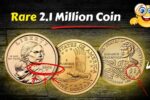
The obverse of the coin features a portrait of Susan B. Anthony designed by Frank Gasparro. Surrounding her image are the words Liberty and In God We Trust, along with the year of minting. The reverse shows an eagle landing on the moon, a design adapted from the Apollo 11 mission insignia, symbolizing American achievement in space.
The coin is composed of a copper core clad in cupronickel, giving it a silver-like appearance without containing actual silver. It weighs slightly more than a quarter and has an eleven-sided inner border, which was intended to help distinguish it by touch. These physical characteristics are important when identifying genuine errors and varieties.
Mint Marks and Key Dates
Susan B. Anthony dollars were struck at the Philadelphia, Denver, and San Francisco mints. Philadelphia coins originally carried no mint mark in 1979 and later added a P. Denver coins display a D, while San Francisco coins carry an S and were primarily proof strikes.
The most common dates are 1979 and 1980, while 1981 coins were made in much smaller quantities and mostly for collectors. The 1999 issue, released years later, is also widely collected due to its one-year-only modern revival. While most of these coins are affordable, certain mint mark combinations and conditions are far scarcer than they appear.
Rare Varieties That Drive High Values
One of the most famous varieties in the Susan B. Anthony dollar series is the 1979 Wide Rim variety, sometimes called the Near Date. On this version, the date appears much closer to the rim than on standard strikes. This subtle difference dramatically increases collector interest, especially in high-grade condition.
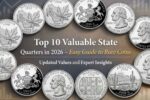
Another important variety is the 1981 proof Type 2 coin from the San Francisco mint. This version features a clearer and more defined S mint mark compared to the blob-like mint mark on Type 1 proofs. Because it was produced in limited numbers and recognized later, it remains one of the key varieties in the series.
Error Coins and the $880,000 Value Story
The reason headlines often mention a Susan B. Anthony Dollar Coin Worth $880,000 lies in extreme mint errors combined with exceptional condition. These coins are not typical circulation pieces but rare mistakes that escaped the minting process.
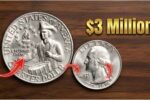
Major errors include double die obverses, where lettering and design elements appear doubled, and off-center strikes that leave part of the coin blank. Some of the most valuable examples involve wrong planchets, where the coin was struck on a blank intended for a different denomination or composition.
When such dramatic errors are paired with pristine condition and professional grading, values can skyrocket. While an $880,000 sale represents an extraordinary case rather than the norm, it demonstrates how modern coins can achieve legendary status among collectors.
How Condition and Grading Affect Value
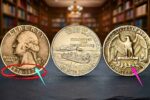
Condition is one of the most critical factors in determining a Susan B. Anthony dollar’s worth. Most circulated coins show wear, scratches, and dull surfaces, limiting their value to a few dollars at most. Uncirculated coins with full luster and minimal marks are far more desirable.
Professional grading services evaluate coins on a scale that reflects strike quality, surface preservation, and overall eye appeal. Coins graded at the highest levels can be worth many times more than similar coins in lower grades. For rare varieties and errors, certification is often essential to establish authenticity and maximize value.
Tips for Collectors and Beginners
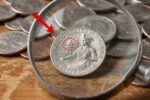
Collectors interested in Susan B. Anthony dollars should start by learning to identify key varieties and common errors. Using a magnifying glass and comparing known examples can help spot important details such as rim spacing, mint mark shapes, and doubling.
It is also important to avoid cleaning coins, as this can permanently reduce their value. Proper storage in protective holders helps preserve condition over time. For coins that appear unusual or potentially valuable, seeking professional evaluation is a wise step.
Why the Susan B. Anthony Dollar Still Matters
Although it was not successful as a circulating coin, the Susan B. Anthony dollar represents an important chapter in American history and numismatics. Its role in honoring a groundbreaking woman and its connection to space exploration give it lasting significance beyond monetary value.
For collectors, the thrill lies in knowing that even a modern coin can hold surprising potential. The Susan B. Anthony Dollar Coin Worth $880,000: Collector’s Guide to Rare Errors and Varieties reminds us that rarity, history, and chance can combine to transform a simple pocket change coin into an extraordinary collectible.